In the same way an organization takes care of its employees, customers, and finances, it also needs to ensure its sensitive data is well protected. Data security is mandated by regulations such as HIPAA, SOX, and GDPR and to ensure compliance. Organizations have a duty to safeguard data privacy by preventing unauthorized access.
In theory, the principle behind data security sounds relatively simple. In practice, data security presents a major challenge for organizations, especially when you consider the large volumes and different types of data generated, stored, sent, and received daily, and the complexity of today’s hybrid IT environments.
What is Data Security?
Data security is the practice of identifying and protecting sensitive data and ensuring it remains secure throughout its lifecycle. Effective data security helps organizations reduce breach risks, maintain compliance, and support safer business collaboration. The data that requires protection is dependent on the compliance regulation or standard that governs the organization – this could be by:
- Industry, such as the Protected Health Information (PHI) privacy rule, or by
- Data type, such as Payment Card Information (PCI) or Personally Identifiable Information (PII)
Data security solutions facilitate the proper handling of this data, helping organizations achieve and maintain compliance through the management and control of data at rest, in use, and in motion.
Data security is both a mindset, and a coordinated, concrete set of efforts and software solutions deployed throughout an organization designed to comprehensively protect data transmitted each day at all stages of its journey.
For comprehensive data security, organizations need to add a layer of protection so that each stage of data is protected throughout its journey for end-to-end security.
Ideally, your data security position should include solutions that can understand and classify your data, detect and prevent leaks, and secure and protect data both at rest and in motion.
Read more: What is Data Security?
Data Security Methods
People, processes, and technology all play a key role when it comes to how data security is applied. No single control method on its own is enough — enterprise data security requires layered defenses that work together. To reduce risk and meet data protection and privacy regulations, safeguarding methods need to include a combination of access, security, and organizational controls. Access to sensitive data needs to be restricted both physically and online. Systems, networks, and applications need the appropriate administrative and security controls, and employees need policies that allow them to understand and implement industry best practices. Automated policies can help reduce the reliance on manual enforcement as well as the risk of human error.
How We Help: By Industry

Defense
Share large files only with suppliers who are cleared for International Traffic in Arms (ITAR) data and prevent unauthorized data sharing.
Share large files only with suppliers who are cleared for International Traffic in Arms (ITAR) data and prevent unauthorized data sharing.

Healthcare
Encrypt and securely transfer patient data with third parties, without fear of breach.
Encrypt and securely transfer patient data with third parties, without fear of breach.

Law Enforcement
Allow community members to submit evidence for law enforcement, including video footage and other documentation of any size, without risk of malware.
Allow community members to submit evidence for law enforcement, including video footage and other documentation of any size, without risk of malware.

Finance
Allow business partners and customers to collaborate securely and remotely, by identifying, classifying, and encrypting data, as well as setting access control on it.
Allow business partners and customers to collaborate securely and remotely, by identifying, classifying, and encrypting data, as well as setting access control on it.

Government
Share classified data on a secure network with another nation, while eliminating risks and unauthorized exposure.
Share classified data on a secure network with another nation, while eliminating risks and unauthorized exposure.

Manufacturing
Protect intellectual property, design files, supplier documentation, and operational data across global partner networks.
Protect intellectual property, design files, supplier documentation, and operational data across global partner networks.
What is Data Privacy?

Data privacy, at its most basic, is defined as the appropriate use of data. When data is entrusted to an organization it is to be used only according to the purposes agreed upon.
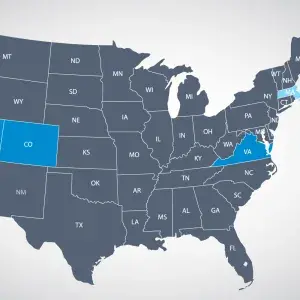
Data privacy and protection laws are becoming increasingly commonplace across the US, with different states introducing new regulations. Ensuring data privacy is prioritized at your organization can help prevent misuse that can result in substantial financial and reputational costs.
Incorporating data protection solutions enterprise-wide can provide the layered security needed to ensure data privacy and protection policies enacted can be carried out.
Data Security and Data Privacy
Why is Data Privacy Important ?
How Do Data Security Solutions Work?
Data security is a must for any organization, but how do data security solutions work? Data security solutions help organizations know what data they have, where it lives, how it is shared, and who has access to it. In a nutshell, data security solutions work by providing visibility and security at the same time.
Data security solutions not only focus on preventing malicious or accidental access to data, they also focus on protecting the data (and even the hidden metadata) that can contain sensitive information.
Modern solutions can utilize cloud-based applications and operate within a hybrid IT environment. Robust solutions can secure data no matter where it resides or how it gets from point A to point B, minimizing internal and external threats.
Watch the webinar >

The Ultimate Guide to Data Protection
Protecting data is paramount to business success. Download this guide to learn what data protection is, why it's so critical, and how businesses can better protect the data they store and process.
Data Security Solutions from Fortra
Fortra provides tools to help improve your organization’s data security and compliance posture. Our data security solutions allow you to understand your sensitive data and keep it secure throughout its lifecycle, no matter where it resides (on premise or in the cloud), or how it’s shared. Not sure which solution is right for your needs? Browse our guide to choosing the best solutions to secure your data.
Download the datasheet >
Featured Integrations
SFT Threat Protection
Ensure every file is inspected and sanitized before continuing to its destination. Our SFT Threat Protection bundle combines the power of Fortra MFT solutions with our Secure ICAP Gateway for seamless, secure file transfers.
- Check out the datasheet
- Read a case study
- Demo the bundle for GoAnywhere or Globalscape
SFT Rights Management
Go beyond managed file transfer for more protection and control of sensitive files. With the SFT Rights Management bundle, you can secure and encrypt files wherever they go, and revoke file access at any point - even after files leave your MFT platform.
- Check out the datasheet
- Watch this video of key use cases
- Demo the bundle for GoAnywhere or Globalscape