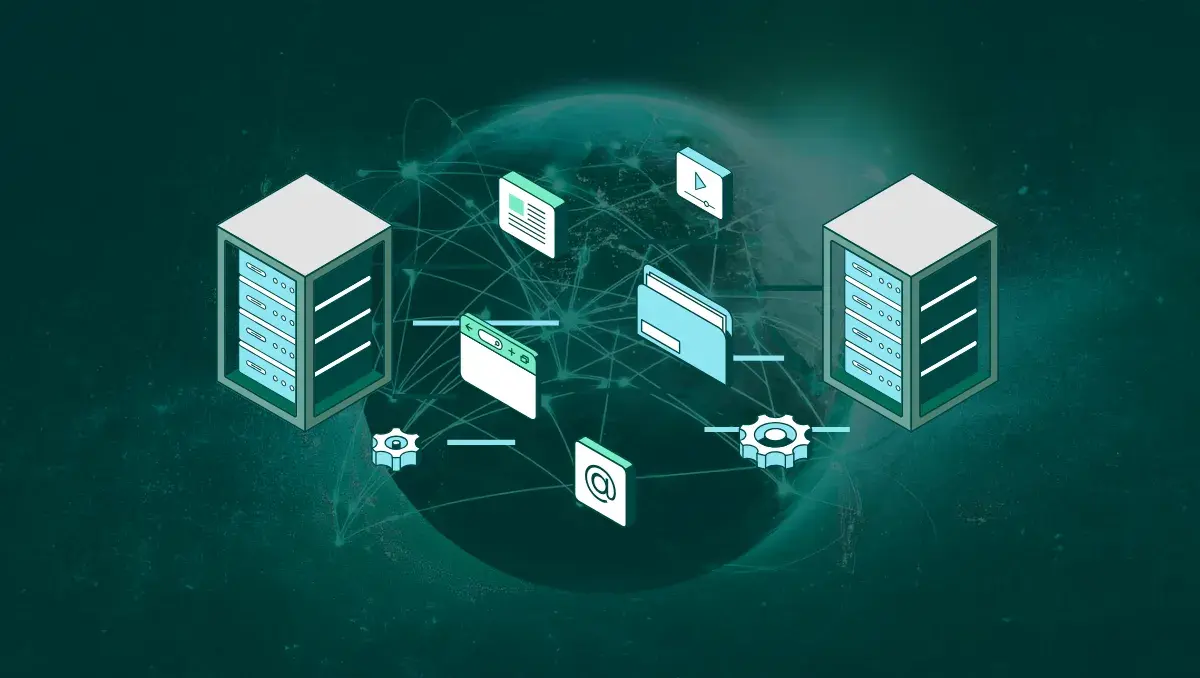
As enterprises move more data across more locations, file transfer performance stops being an afterthought and becomes a real operational issue. What used to be a simple process of moving files from one location to another has evolved to needing to move massive datasets, entire directory trees, and time‑sensitive data between systems that may be spread across regions and even continents.
That’s where traditional file transfer approaches start to show their limitations and liabilities.
High latency, packet loss, and constrained bandwidth can turn routine data transfers into multi‑hour bottlenecks, with undetermined or unreliable final results. Multi‑gigabyte files can crawl across those long‑haul links. And thousands of smaller files can quickly pile up behind slow acknowledgements. And when critical transfers miss their window, downstream systems and teams feel it.
For organizations that depend on reliable, predictable data movement, speed is more than a perk; it’s become a necessity.
Why File Transfer Acceleration Matters at Enterprise Scale
At most enterprise environments, file transfers can often involve:
- Very large files, frequently exceeding 4 GB
- High file counts with deep or complex directory structures
- Transfers that span continents or regions
- Networks affected by latency, packet loss, or congestion
Traditional TCP‑based protocols like FTP, SFTP, and HTTPS were never designed for these conditions. Why is that problematic? They’re highly sensitive to network latency and packet loss, which means performance degrades quickly as distance increases or if network quality drops. Even with careful tuning, long‑distance transfers can slow to a fraction of available bandwidth.
This is often where improvisation starts to creep in—breaking files into smaller chunks, scheduling transfers overnight, or simply accepting delays as the norm. As expected, these approaches don’t scale well.
Accelerated file transfer exists to address exactly these scenarios.
Read More: What is High Latency File Transfer and Why Should You Use It?
Acceleration Built into Managed File Transfer (MFT)
As file volumes grow and transfers stretch across longer distances, performance can no longer be treated as an addon. In practice, acceleration works best when it’s part of the managed file transfer layer itself, not a separate tool that has to be bolted on, monitored independently, or woven into workflows after the fact. Built-in file transfer acceleration can make a difference that matters.
Within GoAnywhere MFT, accelerated file transfer capabilities are integrated directly into the platform through FileCatalyst Service. Rather than introducing a separate transfer engine, acceleration becomes another native option in the MFT environment that can be used alongside existing automation, monitoring, and governance controls.
The service uses FileCatalyst’s UDP-based transfer technology to overcome many of the limitations of traditional TCP. Instead of relying on a single stream and conservative congestion handling, it combines parallel streams, checkpoint restart, and lossless compression to move data efficiently across challenging networks.
The end result is faster, more consistent transfers across virtually any IP network—including those affected by latency or packet loss—without sacrificing the visibility, control, or auditability teams expect from an enterprise MFT platform.
Key capabilities include:
- High‑speed transfers over long distances, even on impaired networks
- Guaranteed delivery with bit‑level integrity checks
- Automatic restart so interrupted transfers resume without starting over
- Strong encryption using industry‑standard protocols like SSL/TLS and AES
Because this capability is built directly into GoAnywhere MFT, accelerated transfers can be used just like any other transfer method. They can be embedded into workflows, triggered by events, monitored centrally, and fully audited—without requiring manual steps or special handling.
File Transfer Built for High‑Volume, High‑Performance Use Cases
File transfer acceleration matters most when volume and distance collide. That’s where FileCatalyst Service proves its value, particularly in scenarios such as:
- Moving large media assets, engineering files, or research datasets
- Synchronizing large directory structures between data centers
- Supporting global operations where data routinely crosses long distances
- Improving transfer reliability over wireless, satellite, or congested networks
When combined with GoAnywhere’s automation and orchestration capabilities, accelerated file transfer becomes a repeatable, governed process, not a one‑off transaction. Transfers run when they’re supposed to, complete within predictable windows, and produce audit records teams and compliance regulators can rely on.
Gain File Transfer Speed Without Sacrificing Visibility or Control
One of the common concerns with high‑performance file transfer tools is the tradeoff between speed and oversight. GoAnywhere avoids that compromise.
With FileCatalyst Service integrated into the platform, administrators can:
- Configure accelerated file transfers as reusable resources
- Embed them into broader enterprise workflows
- Monitor activity in real time
- Maintain full audit trails and reporting
- Apply the same security and governance policies used for other MFT operations
This consistency matters, as accelerated file transfers don’t live outside normal controls or require separate monitoring. They become a first‑class part of enterprise data movement, suitable for both specialized use cases and everyday operations
GoAnywhere: Your Path to Faster, More Reliable File Transfers
By integrating FileCatalyst Service directly into GoAnywhere MFT helps enterprise-level organizations reduce transfer windows, support global operations, and keep data moving without adding complexity.